


Decision Support Guide for Food Transport Vehicles
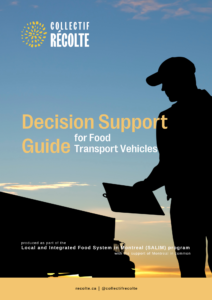
The goal of this guide is to support community organizations and social economy enterprises in their transportation projects, with the aim of facilitating the distribution of fresh, healthy, local food, particularly to vulnerable populations.
Published chapter by chapter, this evolving publication guides you through every stage of your transportation project, from assessing your needs, to selecting your vehicle, to the steps required to initiate and operate a shared transportation project. Based on the many lessons learned from the projects supported by Collectif Récolte, the Decision Support Guide for Food Transport Vehicles is a tool designed to help you acquire your own delivery vehicle.
The first chapter, which is focussed on estimating transport costs, lays the groundwork for your purchase or lease: What are your options? How do you decide whether to lease or buy a truck, and what budget should you set aside for your transport operations?
The second chapter, Buying a truck, is designed to help you frame your research once you’ve made the decision to buy. Not sure where to start? We offer a few things to consider and tips to help guide you in your truck purchase.
The third chapter explores various collective solutions that are already in place in Quebec, including carpooling, car sharing, and models inspired by agricultural cooperatives (CUMA) and labour cooperatives (CUMO), as well as full-service groupage.
The fourth chapter, written in collaboration with Coop Carbone, aims to support community organizations and those in the social and solidarity economy in the practical implementation of a shared transportation project. It proposes a structured approach, from needs assessment to initial trials, as well as the tools essential to the smooth operation of shared transportation.
The fifth and final chapter aims to equip project leaders who wish to measure the direct effects and concrete impacts of their shared transportation initiative. In particular, it highlights the importance of collecting field data and consulting with the various groups involved, so that the tools needed to fully understand the real impacts of a project are available from the outset.
Links
About the same topic



Financed by


